
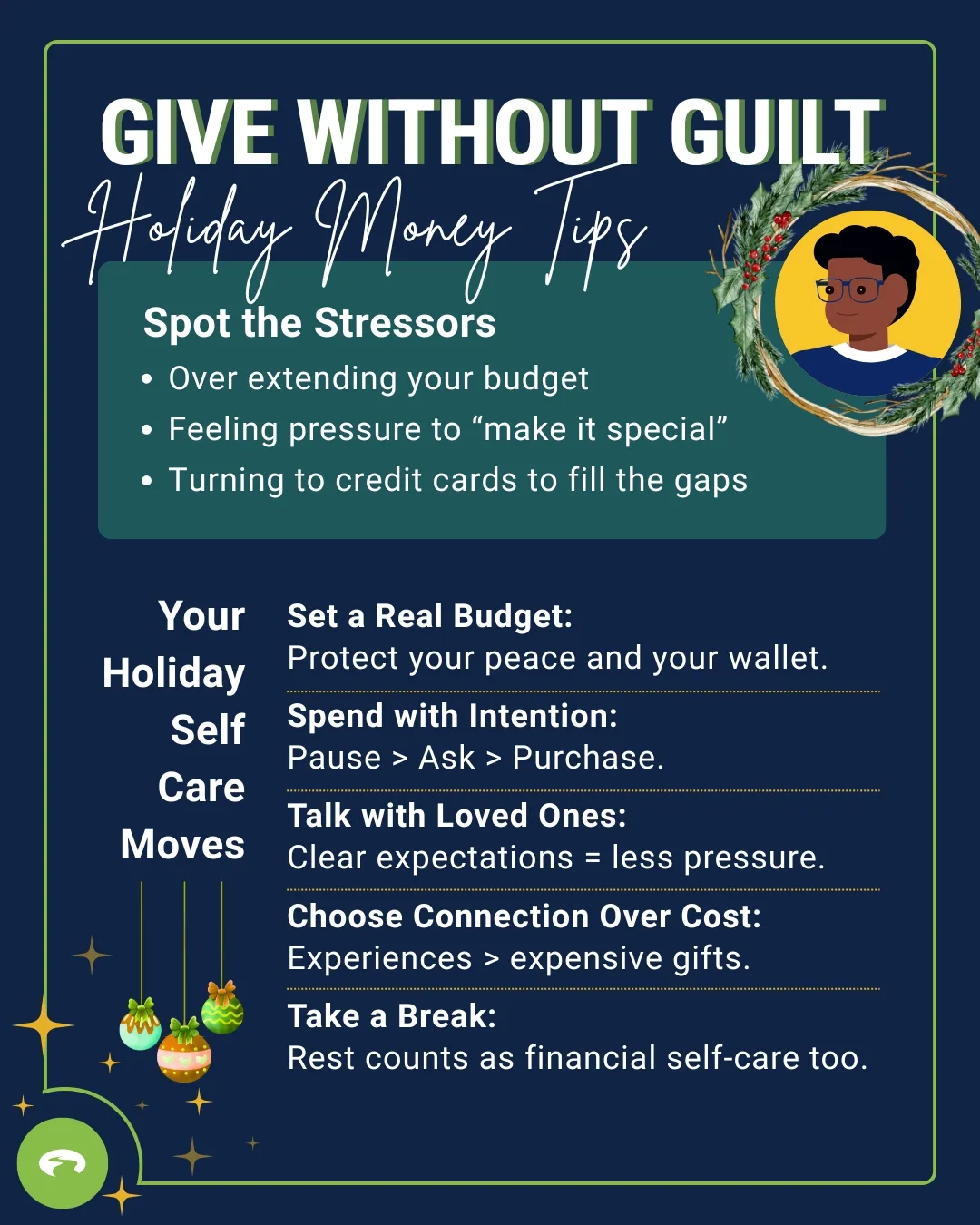
Las fiestas pueden ser tan estresantes emocional y financieramente como alegres, y las preocupaciones por el dinero son comunes.
Practicar el autocuidado financiero significa establecer presupuestos realistas, comunicarse con sus seres queridos y priorizar el bienestar sobre los gastos excesivos.
Algunos hábitos y límites monetarios conscientes pueden proteger sus finanzas y su salud mental esta temporada.
Cuando llegan las fiestas, también lo hace la expectativa tácita de ser generoso y festivo. Pero, ¿qué sucede cuando todo ese buen humor comienza a afectar su billetera y de su cordura?
Muchas personas se topan con un muro de estrés financiero, ansiedad o agotamiento en esta época del año. Y sin un verdadero autocuidado financiero en la mezcla, esa presión puede desplazar la alegría que estaba tratando de crear en primer lugar.
Por qué su billetera siente el peso de las fiestas
Los gastos navideños no se tratan solo de dólares y centavos; Está enredado con los recuerdos, las tradiciones y la presión de crear momentos de "magia de película". No es de extrañar que muchos de nosotros terminemos estirando nuestros presupuestos (y nuestros nervios) tratando de hacer que la temporada se sienta muy especial, solo para enfrentar el Secuelas de la tarjeta de créditoSecuelas de la tarjeta de crédito después de que se apaguen las luces.
Fíjate en cuándo esa magia empieza a sentirse más como un peso. Esa es su señal para proteger su bienestar. Al igual que cuidaría su salud emocional o física, su salud financiera también merece un poco de atención, especialmente cuando el ajetreo de las fiestas aumenta el dial del estrés.
Señales de que la temporada te está agotando
- Se siente ansioso o abrumado cuando piensa en los costos de los regalos, los viajes o los presupuestos de los eventos.
- Tiene la tentación de usar tarjetas de crédito con saldos altos o de acumular deudas para el nuevo año.
- La comparación social o las expectativas te hacen sentir como si "no estuvieras haciendo lo suficiente".
Estas son reacciones comunes y son señales de que es hora de practicar Autocuidado financieroAutocuidado financiero-No solo los gastos navideños.
Cuidado personal financiero: su kit de supervivencia para las fiestas
1. Elabore un presupuesto que no lo deje pasar desapercibido en enero
Comience con un plan claro de gastos navideños que incluya regalos, tarjetas, viajes, comida y actividades festivas. Un presupuestoUn presupuesto No restringe la alegría, lo protege de endeudarse. Divida su presupuesto total en categorías y asigne cantidades específicas a cada una. Apegarse a esos límites ayuda a reducir las compras impulsivas de última hora o el arrepentimiento más tarde.
2. Gasta con intención, no por impulso
Antes de comprar, haga una pausa y pregúntese: ¿Esta compra está alineada con mis valores y presupuesto? Este enfoque de "gasto consciente" puede frenar las compras impulsivas y ayudarlo a concentrarse en lo que realmente importa.
3. Tener "la charla" con la familia (sobre dinero, sí. Usted puede hacerlo.)
Las conversaciones sobre dinero pueden ser incómodas, pero ser honesto sobre su presupuesto con familiares o amigos puede aliviar la presión. Puede ponerse de acuerdo sobre los límites de gasto, elegir regalos centrados en la experiencia o incluso omitir los intercambios de regalos por completo en favor de tiempo de calidad.
4. Protege su paz como si fuera la última galleta
El cuidado personal financiero no se trata solo de dólares, sino de cómo le afecta el estrés de las fiestas. Programe descansos, descanse cuando lo necesite y aléjese de la presión social o de los desencadenantes de las comparaciones (como las redes sociales o las señales de las fiestas de gran gasto).
5. Concéntrese en la conexión, no en el consumo
Una de las mejores maneras de aligerar el estrés financiero es recordar que las fiestas se tratan de personas, no de regalos perfectos. Los gestos simples y sinceros, como tarjetas escritas a mano, comidas compartidas o voluntariado juntos, pueden ser más significativos que los regalos costosos.
Una lista de verificación de autocuidado financiero para las fiestas
Use esta breve lista de verificación para mantenerse con los pies en la tierra e intencional esta temporada:
| Tarea | ¿Por qué es importante? |
| ¿He establecido un presupuesto para las fiestas? | Conocer sus límites le ayuda a gastar con confianza. |
| ¿Conozco mi límite total de gastos navideños? | Un número claro evita gastar de más. |
| ¿He comunicado mis expectativas a mis seres queridos? | La alineación reduce la tensión financiera y emocional. |
| ¿Me estoy enfocando en las experiencias, no solo en los regalos? | Los recuerdos compartidos a menudo duran más que los artículos. |
| ¿He dedicado tiempo al descanso y al cuidado personal? | Tu bienestar merece tanta atención como tu generosidad. |
Cuando su plan necesita una puesta a punto para las fiestas
Si su presupuesto está empezando a aumentar o está sintiendo ese nudo familiar de estrés de los gastos navideños, esa es su señal para hacer una pausa y reiniciar. Recorte las partes de su plan que no le traen alegría, hable abiertamente con la familia sobre las expectativas y haga espacio para unas vacaciones que se sientan sostenibles, no estiradas.
Y recuerde, no tienes que resolverlo por su cuenta. GreenPath ofrece Asesoramiento financiero gratuito e individualAsesoramiento financiero gratuito e individual para ayudarlo a ver su panorama completo: su presupuesto, deudas y metas, así como un Programa de Manejo de Deudas (DMP)Programa de Manejo de Deudas (DMP) Diseñado para ayudarlo a reducir los intereses, simplificar los pagos y comenzar el nuevo año con un camino más claro.
También le puede interesar...
Webinar: Establecer y alcanzar metas en 2026 Establecer y alcanzar metas en 2026
Lo que aprenderá
- Cómo establecer objetivos realistas que realmente se puedan lograr
- El papel que juegan los hábitos financieros en el logro (o abandono) de sus objetivos financieros
- Cómo volver a la senda del triunfo después de un revés
Servicio Financiero GreenPath
Programa de manejo de deudas
GreenPath es una organización nacional sin fines de lucro confiable desde hace 60 años, aprenda cómo el programa de manejo de deudas de GreenPath puede ayudarlo a pagar su deuda en 3-5 años, mientras le permite desarrollar una educación financiera sólida.